
Activities and Exercise
July 2, 2023
Maintenance of a clear airway is critical. Many infants need suctioning to remove mucus from the nose and mouth. Newborns are obligate (necessary or required) nose breathers; they must be able to breathe through the nose while suckling. Therefore, the nasal passageway must be kept open and free from mucus. A small
bulb syringe is commonly used. Compress it before insertion and then gently release it to suction secretions. Explain to parents the use of the bulb syringe before the first feeding. For the first few days, a bulb syringe should always be kept with the newborn, particularly during feeding.
Crying is the newborn’s only means of communication. The cry can indicate hunger, pain, the need for attention, or fussiness. The newborn’s cry should be strong, vigorous, and of medium pitch. As mother and infant become more adept at interpreting each other’s behavior, some mothers are able to distinguish the reason for crying. The following report indicates that mother and baby are communicating effectively:
- I can tell when she’s hungry. Crying starts in a plaintive [sorrowful, sad] way and then becomes more and more demanding. When she is hurt, she lets out a startled yell as though she couldn’t believe it was happening to her. Sometimes when she is put down to sleep, she starts a kind of talking cry, jerky and demanding: it gets louder, and if nothing happens, fades away in little spurts. The fussy cry is the hardest to take—nothing seems to work; like a complaining that goes on and on.
A high-pitched cry may indicate neurologic problems and should be observed further and evaluated by a physician. See the Patient Teaching box for infant quieting techniques.
Parent-Child Attachment
The human infant is born defenseless and could not survive without a caregiver. The parents are responsible for the infant’s physical and psychological development.
Parenting is not instinctive; a new parent must bond with the baby first. Parent-child attachment (bonding) is defined as the initial phase in a relationship characterized by strong attraction and a desire to interact (Figure 27-12). Without bonding, parents find the energy needed to meet the newborn’s needs difficult to maintain. The nurse cannot make bonding occur but can facilitate its development.
Early contact with the infant is important to establish bonding. A new mother normally wishes to touch and explore her baby. Holding the infant close and looking eye to eye (the en face position) helps bonding occur (Figure 27-13). It is normal for a new mother to talk in high-pitched tones to the baby. Encourage early and frequent interaction between the newborn and the parents (Figure 27-14). Attachment increases when the infant begins to respond.
The newborn has amazing capabilities. The infant is a socially responsive human who can probably learn better on the first day of life than ever again. Immediately after birth, the baby stares intently at the parents’ faces and sees them. In fact, the newborn prefers looking at the mother’s face, especially the eyes, to looking at other objects. The newborn also can recognize an approaching object as a threat and turns away to avoid it. He or she reaches for an object and usually comes close to touching it. The newborn imitates another person’s facial expressions, such as sticking out the tongue, opening the mouth, and pursing the lips. Newborn babies are active stimulus seekers where repetition and the level of stimulation are important. The baby is capable of shutting out stimuli and may even turn his or her head at the sound of the mother’s voice.
Patient Teaching: Infant Quieting Techniques
- Many newborns feel insecure in the center of a large crib. They prefer a small, warm, soft space that reminds them of intrauterine life. Try a smaller bed, such as a bassinet, portable crib, buggy, or cradle, or use a rolled-up blanket to turn a corner of the big crib into a smaller place.
- Carry baby in a frontpack or backpack.
- Swaddle newborn snugly in a receiving blanket. Swaddling keeps the newborn’s arms and legs close to his or her body, similar to the intrauterine position. It makes the newborn feel more secure.
- Prewarm the crib sheets with a hot water bottle or heating pad that is removed before putting the baby to bed. Some babies startle when placed on a cold sheet.
- Some newborns need extra sucking to soothe themselves to sleep. Breastfeeding mothers may prefer to let their infant suckle at the breast as a soothing technique. Other mothers choose to use a pacifier. Stroke the pacifier against the roof of the baby’s mouth to encourage him or her to suck it during the first 2 weeks. Around age 3 months, infants can find and suck their thumbs as a way of self-consoling.
- A rhythmic, monotonous noise that simulates the intrauterine sounds of the maternal heartbeat and blood flow may help the infant settle down. Some parents have found it helpful to put a fussy baby in a portable crib beside the dishwasher or washing machine.
- Movement often helps quiet a baby. Take the baby for a ride in the car or an outing in a stroller or carriage. Rock the baby in a rocking chair or cradle.
- Place the baby on his or her stomach across the lap; pat and rub the back while gently bouncing legs or swaying them from left to right.
- Babies enjoy skin-to-skin contact. A combination of this and warm water often helps soothe a fussy baby. Fill the tub with warm water. Get in and let the baby lie on the chest so that the baby is immersed in the water up to his or her neck. Cuddle the baby.
- Let the baby see your face. Talk in a soothing voice.
- • The baby may simply need more stimulation. Bring him or her into the room where the family is gathered. Change the baby’s position; many babies like to be upright, such as being held up on the shoulder.
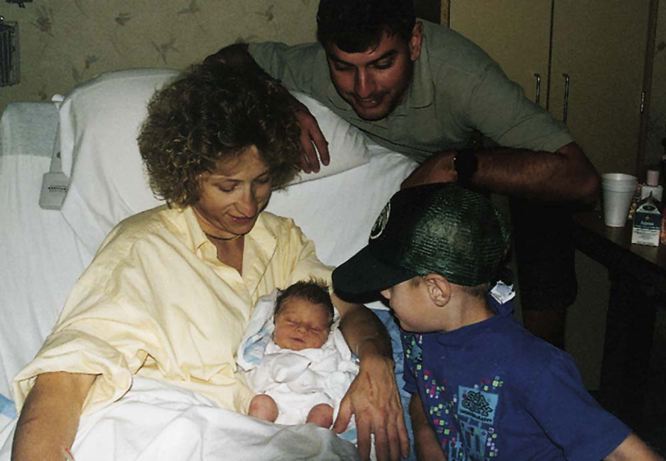
FIGURE 27-12 Parents and sibling interacting with a newborn.

FIGURE 27-13 The infant is quiet and alert during the initial sensitive period. The newborn gazes at the mother and responds to her voice and touch.
(From McKinney ES, Murray SS: Foundations of maternal-newborn nursing, ed 5, Philadelphia, 2010, Saunders.)

FIGURE 27-14 The behavior of fathers at initial contact with their infant often corresponds to maternal behaviors. The intense fascination that fathers exhibit is called engrossment. Note eye-to-eye contact between father and infant.
(From McKinney ES, Murray SS: Foundations of maternal-newborn nursing, ed 5, Philadelphia, 2010, Saunders.)
Indeed, babies are not passive and unresponsive creatures to be hurried off to the hospital nursery after birth. The affectionate bond between parents and child begins at the moment of birth (see Figures 27-13 and 27-14). As long as the newborn is responding normally, immediate skin-to-skin contact with the parents is important in bonding. The newborn has difficulty opening the eyes under bright spotlights but looks around if the lights are dimmed. (If necessary, dim the main lights in the delivery area and keep a light focused over the perineum for episiotomy repair or other procedures.) Shielding the infant’s face with a hand or a blanket also provides enough protection from the light to encourage the baby to open the eyes. Objects are in clearest range for the newborn at about 8 to 10 inches. Newborns prefer faces over other patterns. Refraining from using prophylactic eye drops and weighing and measuring the baby for 30 minutes to 1 hour after birth allows the parents time alone with their baby so that the attachment process can proceed without interruption. The mother may wish to breastfeed in the first hour after birth; the nurse or the father can assist her.
Periods of quiet alertness are best for interaction. Explain the different levels of alertness to the parents so they can recognize them. Time care so that the mother is available to enjoy quiet moments with her newborn.
Nursing diagnoses for the newborn infant may include the following:
- Risk for ineffective airway clearance
- Risk for ineffective thermoregulation
- Risk for injury
- Risk for infection
- Health-seeking behaviors (desire for information about infant care)
- Ineffective breathing pattern
- Acute pain