
Anatomy and Physiology of the Ear
April 11, 2024
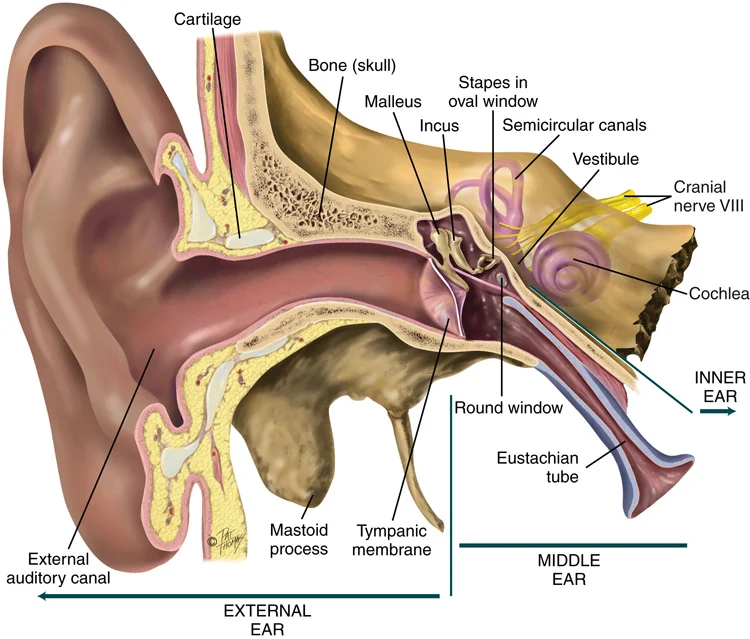
FIGURE 16.3 Anatomy of the ear. From Jarvis C: Physical examination and health assessment, ed 7, Philadelphia, 2016, Saunders.
Anatomy and Physiology of the Ear
Learning Objective: Examine the anatomy and physiology of the ear.
The visible portion of the ear is only a small part of the actual organ of hearing. Most of the sensory structure lies hidden in the temporal bone of the skull. The ear is divided into the outer, middle, and inner ear (Figure 16.3). The anatomy of the ear is discussed in the following sections.
Outer (External) Ear
Learning Objective: Describe the anatomy of the outer (external) ear.
The outer ear consists of the auricle, or pinna. This is the fleshy part of the ear that can be seen on the side of the head. The next structure is the external auditory canal, the tube that extends from the auricle into the tympanic membrane (eardrum).
The auricle collects sound waves and sends them into the auditory canal. The skin that lines the auditory canal contains numerous hair follicles and many nerve endings. Earwax, or cerumen, is secreted by modified sweat glands within the external auditory canal. Both the hair and the waxy cerumen help prevent foreign objects from reaching the eardrum. The canal has a slightly curved shape and is approximately 1 inch (2.5 cm) long.
Middle Ear
Learning Objective: Describe the anatomy of middle ear.
The middle ear is an air-filled cavity that contains three tiny bones called the ossicles: malleus, incus, and stapes. Tiny ligaments link these three tiny bones to form a bridge from the tympanic membrane to the inner ear. The ossicles transmit sound to the inner ear through the movement of the stapes. Within the middle ear is an opening for the eustachian tube. This is a connection between the ears and the throat. This connection helps equalize pressure within the middle ear. Without equalized pressure in the ear, hearing would not be possible.
The tympanic membrane is a thin, disc-shaped tissue that seals off the outer ear from the middle ear. Sound waves conducted through the external auditory canal hit the tympanic membrane and cause it to vibrate. The vibrations are picked up by the three ossicles and are changed from air-conducted sound waves to bone-conducted sound waves. The ossicles transmit the bone-conducted sound waves through the middle ear to the oval window. The oval window is a membrane that connects the middle ear and the inner ear. At the oval window, the sound waves move into the fluids of the inner ear. The fluid motion excites receptors, changing the bone-conducted sound into sensorineural impulses.
Inner Ear
Learning Objective: Describe the anatomy of the inner ear.
Once sound is conducted to the oval window, it is transmitted to a structure called the labyrinth, or the inner ear. The inner ear is divided into the cochlea and the semicircular canals, which are joined by the vestibule. The semicircular canals and vestibule function to maintain equilibrium. The cochlea is responsible for the sense of hearing.
The organ of Corti, which contains the receptors for sound, is located within the cochlea. It is made up of hairlike sensory cells surrounded by sensory nerve fibers that form the cochlear branch of the eighth cranial nerve. Sound impulses cause the hairs to bend and rub against the nerve fibers, which initiate stimuli to travel through the cochlear nerve into the brain for sound interpretation.
The semicircular canals are responsible for evaluating the position of the head in relation to the pull of gravity. The three canals are positioned at right angles to one another on different planes. When the head turns rapidly, these fluid-filled canals must rapidly adjust and send the information to the central nervous system (CNS). The CNS then interprets the information and initiates the desired response to maintain balance. The semicircular canals detect dynamic equilibrium. Within the vestibule, two saclike structures function to establish the body’s static equilibrium. With repetitive or excessive stimulation to the equilibrium receptors, some people become nauseated and may vomit. This condition is known as motion sensitivity or motion sickness.
Physiology of the Ear
Learning Objective: Examine the physiology of the ear.
Hearing starts with the sound waves reaching the tympanic membrane. Those sound waves cause the tympanic membrane to vibrate, which causes the ossicles to transmit the waves to the oval window. It is at the inner ear that the sensorineural impulses reach the cochlea.
The organ of Corti contains the receptors for sound and is located within the cochlea of the inner ear. Sound impulses cause the hairlike sensory cells of the cochlea to bend and rub against the nerve fibers. The movement initiates an auditory impulse, which travels through the cochlear nerve onto the eighth cranial nerve. The eighth cranial nerve transmits the auditory impulse to the medulla oblongata. The impulses then travel to the thalamus and on to the auditory cortex of the temporal lobe of the brain. The brain then interprets the auditory impulse into audible sound and speech patterns.The semicircular canals are responsible for evaluating the position of the head in relation to the pull of gravity. The three canals are positioned at right angles to one another on different planes. When the head turns rapidly, these fluid-filled canals must rapidly adjust and send the information to the central nervous system (CNS). The CNS then interprets the information and initiates the desired response to maintain balance. The semicircular canals detect dynamic equilibrium. Within the vestibule, two saclike structures function to establish the body’s static equilibrium. With repetitive or excessive stimulation to the equilibrium receptors, some people become nauseated and may vomit. This condition is known as motion sensitivity or motion sickness.