
Anatomy of the Gastrointestinal Tract
April 11, 2024
Learning Objective: Examine the anatomy of the gastrointestinal tract.
The gastrointestinal tract is also called the digestive tract and the alimentary canal. It consists of a large, muscular tube that, with the help of hormones and enzymes, digests food. The GI tract starts at the mouth and extends to the anus. It includes the mouth, pharynx (throat), esophagus, stomach, small intestine, and large intestine. Each of these structures is discussed in depth.
Mouth
Learning Objective: Describe the anatomy of the mouth.
The cheeks, lips, tongue, hard palate, and soft palate form the mouth (also called the oral cavity or buccal cavity) (FIGURE 19.1A). The roof of the mouth is created by the anterior hard palate and the posterior soft palate. The uvula is a fleshy structure that hangs above the throat, at the back of the soft palate. Adults have 32 permanent teeth that are set in the gums (also called gingivae). Saliva from the salivary glands helps to lubricate the food, making it easier to swallow (FIGURE 19.1B). The salivary glands will be discussed later in the chapter.
Pharynx
Learning Objective: Discuss the anatomy of the pharynx.
When food or liquid is swallowed, it moves into the pharynx (FAIR inks), or throat. The pharynx is divided into three sections:
• Nasopharynx: Located behind the nasal cavity
• Oropharynx: Located behind the mouth; part of the respiratory and digestive systems
• Laryngopharynx: Located between the epiglottis and the esophagus
Esophagus
Learning Objective: Discuss the anatomy of the esophagus.
The esophagus connects the pharynx to the stomach (FIGURE 19.2). This muscular tube runs behind the trachea and the heart. The esophagus is lined with a mucous membrane that secretes mucus, helping the mass of food, or bolus, pass into the stomach. Peristalsis, or the muscular contractions of the esophagus, helps to move the food into the stomach.
A sphincter is located at the top and bottom of the esophagus. When the upper esophageal sphincter (UES) constricts, it prevents air from entering the esophagus. The lower esophageal sphincter (LES), or the cardiac sphincter, is located between the esophagus and the stomach. When the LES constricts, it prevents the stomach contents from moving up the esophagus. When a person swallows, the LES relaxes, allowing the bolus to move into the stomach.
Stomach
Learning Objective: Describe the anatomy of the stomach.
The stomach serves as a reservoir for food. The stomach is divided into three sections:
• Fundus: Top of the stomach, sits just below the diaphragm
• Body: Main part of the stomach
• Pylorus: Bottom of the stomach, between the body and the small intestine
The stomach wall contains rugae, which, when unfolded, allow for greater expansion of the stomach size.
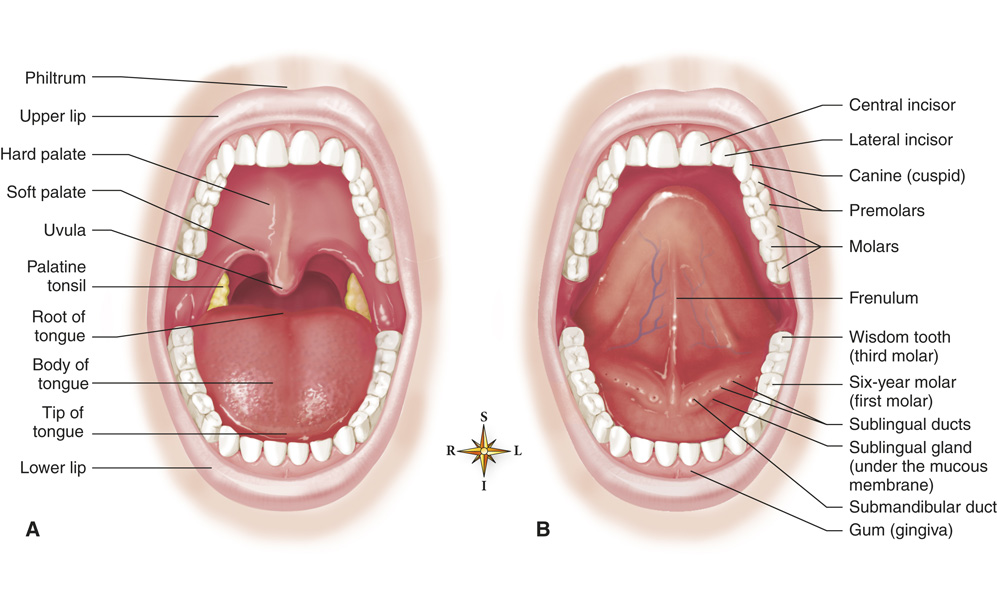
FIGURE 19.1 Mouth. (A) Mouth cavity showing the hard and soft palates, tongue surface, and uvula. (B) Undersurface of tongue showing the frenulum, sublingual gland, and opening of sublingual duct. GI, Gastrointestinal. From Patton KT, Thibodeau GA: The human body in health and disease, ed 7, St. Louis, 2018, Elsevier.
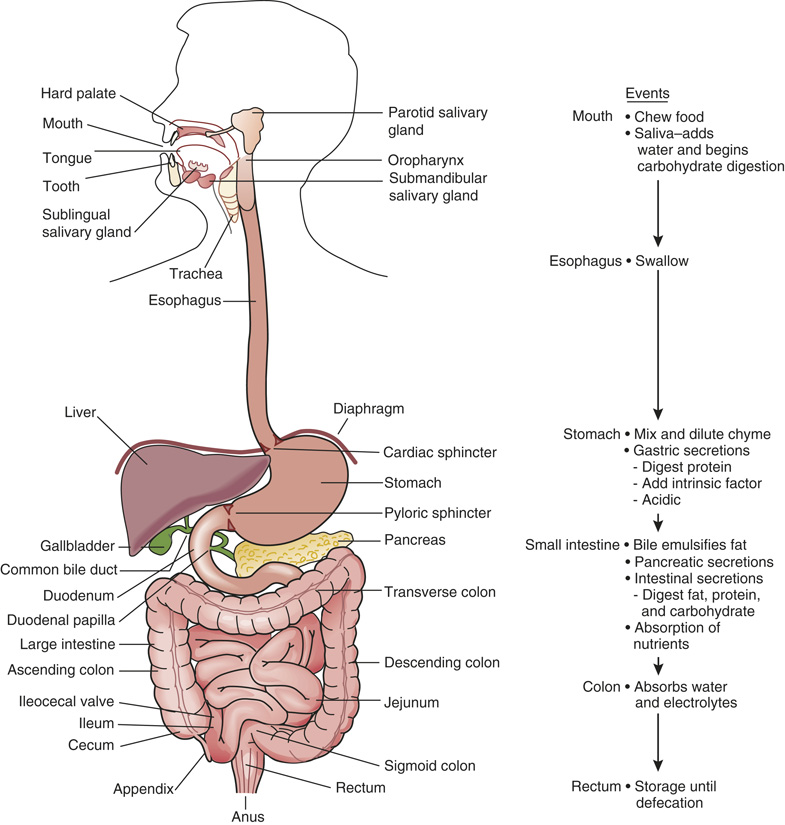
FIGURE 19.2 The anatomy of the digestive system and associated events. From VanMeter KC, Hubert RJ: Gould’s pathophysiology for the health professions, ed 5, Philadelphia, 2015, Saunders.
Tiny glands in the mucous membrane lining of the stomach produce digestive enzymes, intrinsic factor, hydrochloric acid, mucus, and bicarbonate. These make up the gastric juice. Gastric juice is continually being made, but the amount made at certain times varies. Certain things trigger more gastric juice to be made, including thoughts of eating, the smell of food, and the presence of food in the mouth and stomach. The smooth muscles in the stomach provide churning and mixing action, which helps combine the gastric juice with the food ingested, creating a mixture called chyme. A continuous coating of mucus protects the stomach and the rest of the digestive system from the acidic nature of chyme and gastric juices.
Besides being a food reservoir and secreting gastric juices, the stomach has additional roles:
• Producing gastrin, a hormone that regulates the digestive functions
• Producing ghrelin, which increases the appetite
• Protecting the body by killing disease-causing bacteria in food
• Absorbing alcohol, some water, certain drugs, and some fatty acids
The pyloric sphincter is located between the pylorus and the small intestine and regulates the passage of food into the small intestine (FIGURE 19.3). When the pyloric sphincter relaxes, the chyme empties out of the stomach and into the small intestine.
19.2 Critical Thinking Application
Keith tries to remember the roles of the stomach as he prepares for his day with the gastroenterologist. List the roles of the stomach.
Small Intestine
Learning Objective: Describe the anatomy of the small intestine.
The small intestine has about a 1-inch lumen and is about 20 feet long. It loops around and fills most of the abdominal cavity. The small intestine is made up of three parts:
• Duodenum: Smallest part of the small intestine; connected to the stomach by the pyloric sphincter.
• Jejunum: Second largest part of the small intestine; connected to the duodenum and the ileum.
• Ileum: Largest part of the small intestine; connects to the jejunum and the large intestine. It joins the cecum at the ileocecal valve.
The lining of the small intestine has plicae (folds), which contain small projections called villi. The villi are covered by microvilli (epithelial cells that have a brushlike shape). The villi and microvilli increase the surface area of the small intestine and make absorption of nutrients more efficient. Each villus contains a lacteal (lymph vessel) that absorbs lipids (fats) and fat-soluble vitamins. The blood capillary absorbs glucose and amino acids (FIGURE 19.4).
Each of the three sections of the small intestine has important roles:
• Duodenum: Receives chyme from the stomach. Pancreatic enzymes, bile from the liver, and bicarbonate mix with the chyme. Pancreatic enzymes break down chyme. Bile helps break down and absorb fat. Bicarbonate neutralizes the acid from the stomach.
• Jejunum: Contains larger villi; thus, absorption is the primary function of this section. Sugars, fatty acids, and amino acids are absorbed.
• Ileum: Limited absorption occurs in this section. Bile acids and vitamin B12 are most often absorbed for reuse in the body.
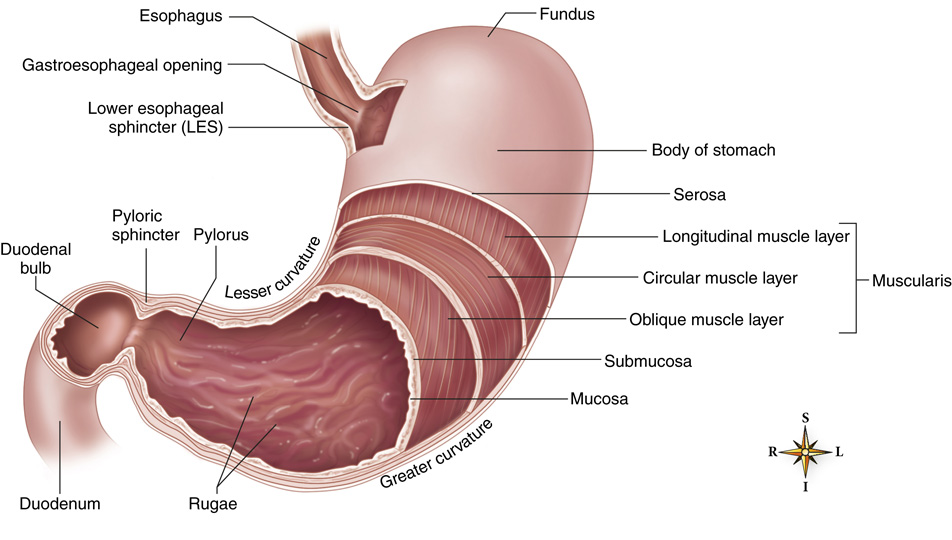
FIGURE 19.3 Stomach. A portion of the anterior wall has been cut away to reveal the three muscle layers of the stomach wall. Notice that the mucosa lining the stomach forms folds called rugae. From Patton KT, Thibodeau GA: The Human body in health and disease, ed 7, St. Louis, 2018, Elsevier.
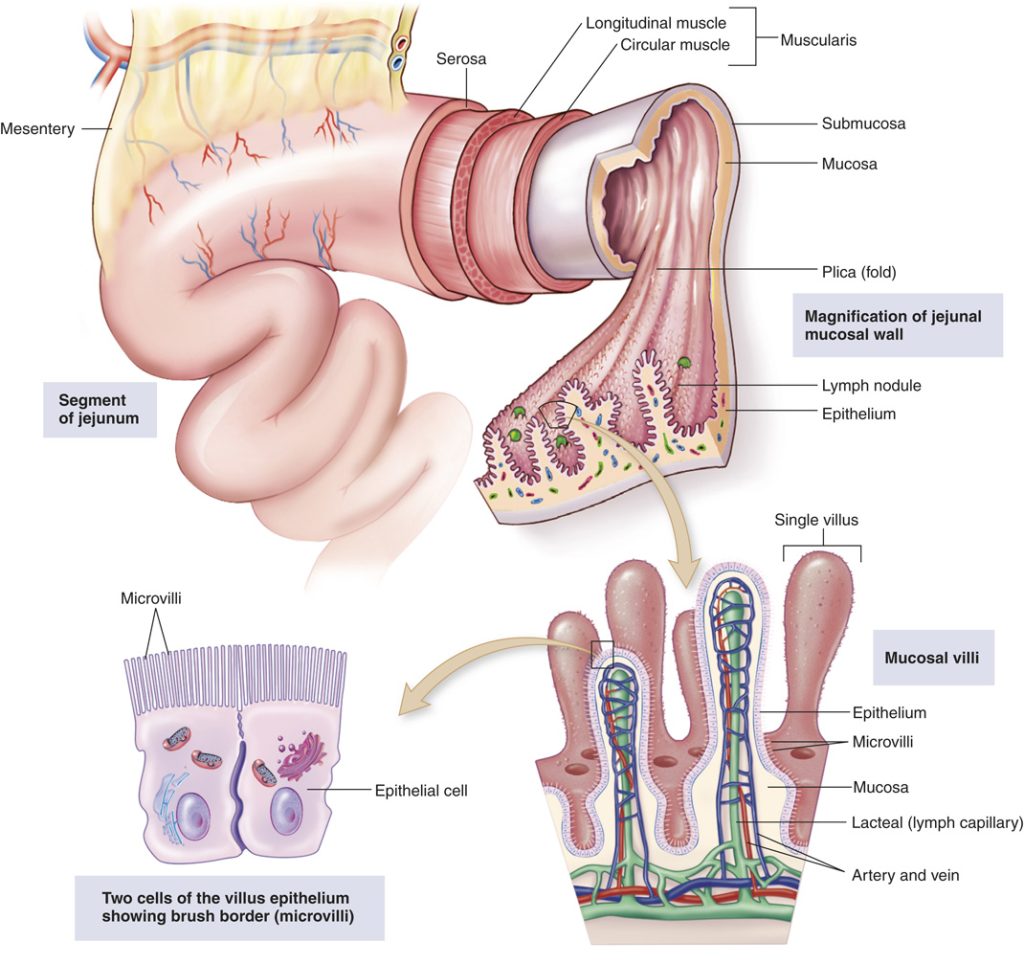
FIGURE 19.4 Small intestine. Note the four tissue coats or layers and the presence of villi and microvilli, which increases the area available for absorption. From Patton KT, Thibodeau GA: The human body in health and disease, ed 7, St. Louis, 2018, Elsevier.
Chyme from the stomach empties into the duodenum. Peristalsis moves the chyme through the duodenum, jejunum, and the ileum. The ileocecal valve is found between the ileum (of the small intestine) and the cecum (of the large intestine). The ileocecal valve controls the passage of chyme into the cecum and prevents the backflow of chyme into the small intestine.
Large Intestine
Learning Objective: Describe the anatomy of the large intestine.
The large intestine or colon has about a 3-inch lumen and is about 5 feet long. The large intestine is made up of these six sections:
• Cecum: A 2- to 3-inch pouch or tubelike structure in the lower right abdomen that is considered the first section of the large intestine. The main roles of the cecum include receiving chyme from the small intestine and absorbing fluids and salts. Mucus is also mixed with the chyme in the cecum. Attached to the cecum is the vermiform appendix. The function of the appendix is not entirely known, though research suggests that it harbors “good bacteria,” which will repopulate the intestines after an illness.
• Ascending colon: The second part of the large intestine, which extends vertically from the cecum to just below the liver (see FIGURE 19.2).
• Transverse colon: Extends horizontally from the ascending colon to the descending colon.
• Descending colon: Extends vertically on the left side of the abdomen from the transverse colon to the sigmoid colon.
• Sigmoid colon: Forms an S-shaped curve; attaches to the descending colon and the rectum.
• Rectum: Stores the stool until defecation, or a bowel movement (BM), occurs, and the stool is released through the anus.
The watery waste products move from the small intestine into the large intestine. The primary functions of the large intestine include the following:
• Reabsorbing water and electrolytes: The large intestine has no villi for nutrient absorption but can reabsorb water and electrolytes (e.g., sodium and potassium). The longer the stool is in the colon, the more water is absorbed. The quicker the stool passes through the large intestine, the more water it contains.
• Making vitamin K: The bacteria in the large intestine make vitamin K, which is used for blood coagulation, bone mineralization, and cardiovascular health.
• Eliminating waste products from the body.
Bacteria in the Colon
The bacteria in the colon can help with the digestion of some materials. This digestive process can cause gas to be formed, and when it is released through the anus, it is called flatus. The bacteria in the colon produce vitamin K and biotin (vitamin B7).
The majority of the colon bacteria are nonpathogenic. The bacteria colonized in the colon (also called gut flora or microbiota) are important for our maturation, immune system development, and metabolism. Cardiovascular disease, metabolic diseases (e.g., diabetes and obesity), and inflammatory bowel disease are some diseases that have been associated with changes in the intestinal bacteria. Antibiotic therapy can also change the delicate microbiota balance in the gut.
Usually, the microbiota prevents Clostridium difficile colonization. With some antibiotic therapies, C. difficile may be allowed to grow, causing intestinal inflammation, diarrhea, and, in some cases, death. C. difficile is spread by the fecal-oral route and is shed in the stool of infected patients. The C. difficile spores have a long survival and are difficult to kill. They are not destroyed by alcohol-based hand sanitizers. C. difficile infections are treated with antibiotics, and the risk of reinfection is high.
19.3 Critical Thinking Application
Keith is reviewing the anatomy of the GI tract. List the sections of the small and large intestines in order.