
Carcinomas of the Skin
April 11, 2024
Carcinomas of the Skin
Learning Objective: Examine carcinomas of the integumentary system, including the signs, symptoms, diagnostic procedures, and treatments.
Skin cancer is the abnormal, malignant growth of skin cells. Skin that is exposed to the sun is at higher risk for developing skin cancer, but skin cancer can also occur on skin not ordinarily exposed to sunlight.
There are three major types of skin cancer:
• Basal cell carcinoma
• Squamous cell carcinoma
• Melanoma, often called malignant melanomaThere are three major types of skin cancer:
Skin cancer starts with mutations that occur in the DNA of skin cells. The mutations cause the cells to grow out of control and form cancer cells. Skin cancer begins in the epidermis.
Skin cancer can happen in three different types of cells in the epidermis:
• Squamous cells lie just below the outer surface of the skin.
• Basal cells produce new skin cells and are located beneath the squamous cells.
• Melanocytes produce melanin, the pigment that gives skin its normal color. They are located in the lower part of the epidermis.
These cancers are thought to be caused by exposure to UV rays of the sun. UV rays can damage DNA in the skin’s cells, which starts a mutation. However, not all cancers develop in areas of the body exposed to the sun; it is still unknown what other specific factors influence the start of a malignant mutation. Additional risk factors for skin cancer include fair skin with blond or red hair, light-colored eyes, and skin that freckles or sunburns easily; a history of sunburns that have blistered; moles that look irregular and are generally larger than normal moles; and a family history of skin cancer (if one parent or a sibling has had skin cancer, there may be an increased risk of the disease).
Basal Cell Carcinoma
Learning Objective: Describe basal cell carcinoma.
Basal cell carcinoma most frequently appears on sun-exposed areas (FIGURE 17.17) and may appear as follows:
• A pearly or waxy bump
• A flat, flesh-colored or brown scarlike lesion
Squamous Cell Carcinoma
Learning Objective: Describe squamous cell carcinoma.
Squamous cell carcinoma most frequently appears on sun-exposed areas (FIGURE 17.18) and may appear as follows:
• A firm, red nodule
• A flat lesion with a scaly, crusted surface
Melanoma
Learning Objective: Describe melanoma.
Melanoma can develop anywhere on the body (FIGURE 17.19). It can start in normal-looking skin or an existing mole. Skin that has not been exposed to sunlight can still develop melanoma. Melanoma can affect people of any skin color. People with darker skin can develop melanoma on the palms of their hands or the soles of their feet, or even under fingernails or toenails. Melanoma may appear as follows:
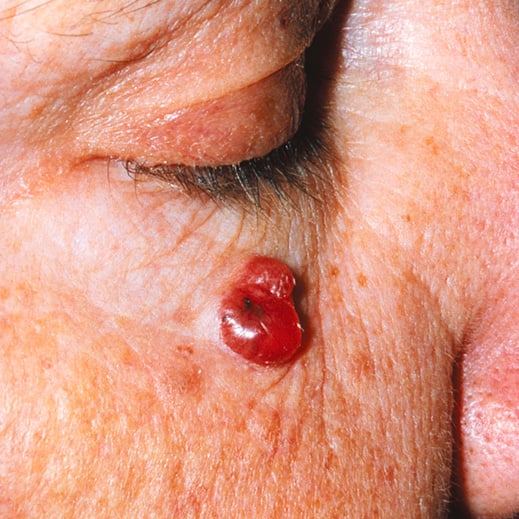
FIGURE 17.17 Basal cell carcinoma. From James WD, et al: Andrews’ diseases of the skin, ed 11, Philadelphia, 2011, Saunders.
FIGURE 17.18 Squamous cell carcinoma. From Pfenninger JL, Fowler GC: Pfenninger and Fowler’s procedures for primary care, ed 3, Philadelphia, 2011, Saunders.
• A large brownish spot with darker speckles
• A mole that changes in color, size, or feel or that bleeds
• A small lesion with an irregular border and portions that appear red, white, blue, or blue-black
• Dark lesions on the palms of the hands, soles of the feet, fingertips, or toes
To diagnose any type of skin cancer, the provider will do the following:
• Examine the skin and look for changes that are likely to be skin cancer.
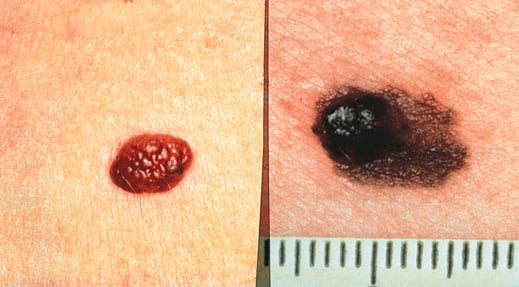
FIGURE 17.19 Pigmented skin lesions. Left, Benign pigmented nevus (mole). Right, Malignant melanoma. Courtesy National Cancer Institute, Bethesda, MD.
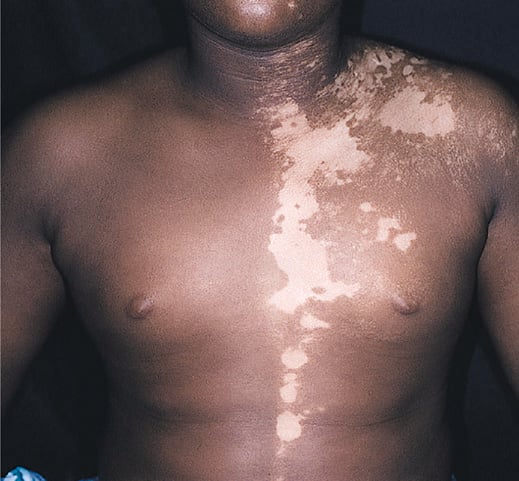
FIGURE 17.20 Vitiligo. From Shiland B: Mastering healthcare terminology, ed 5, St. Louis, 2016, Elsevier.
• If abnormal areas of the skin are found, a skin biopsy will be performed. A biopsy will determine whether skin cancer is present and what type of cancer it is.
• Additional tests may be done to determine the extent or stage of the skin cancer. These tests might include the following:
• Imaging tests to examine nearby lymph nodes for signs of cancer.
• Removal of a nearby lymph node that will be tested for signs of cancer and staged; a skin cancer’s stage helps determine which treatment options will be most effective.
Treatment for skin cancer varies greatly, depending on the type of skin cancer and its stage. Early detection and treatment are always the best options for any type of skin cancer, but that is not always possible.
Common treatments for basal cell and squamous cell carcinomas include the following:
• Mohs micrographic surgery
• Excisional surgery
• Topical medications and photodynamic therapy (PDT)
• Electrosurgery, cryosurgery, or laser surgery
Treatment for melanoma varies greatly, depending on the location and stage of the cancer. Treatment ranges from minor localized surgery to major surgery, radiation, and chemotherapy.
17.4
Critical Thinking Application
After Jean Burke and Casey go over the proposed treatment plan, Jean takes out a brochure on skin cancer. She shows the brochure to Casey and reminds her of how important her skin is. Even though Casey is young, precautions taken now could help prevent skin cancer in her future. List five preventive measures that she can take now in order to protect her skin from cancer. Share with the class.