
Infections
April 11, 2024
Infections
Learning Objective: Examine infections that impact the nervous system, including the signs, symptoms, etiology, diagnostic procedures, and treatments.
Infections, such as encephalitis and meningitis, can also impact the nervous system. The following sections discuss these infections, along with shingles.
Encephalitis
Learning Objective: Discuss encephalitis, including the signs, symptoms, etiology, diagnostic procedures, and treatments.
Encephalitis is the inflammation of the brain. There are several types of encephalitis:
• Japanese encephalitis: Mosquito-transmitted viral infection that occurs in Asia and the western Pacific. Travelers can be vaccinated for the prevention of this disease.
• La Crosse encephalitis: Mosquito-transmitted viral infection that occurs in the upper Midwestern, mid-Atlantic, and southeastern states.
• Saint Louis encephalitis: Mosquito-transmitted viral infection that occurs in the eastern and central states.
Encephalitis can be caused by a viral or bacterial infection. With a mild case, a person may have flu-like symptoms. With a severe case, a person may experience a severe headache, drowsiness, vomiting, confusion, seizures, and a sudden fever. Babies may constantly cry, not eat well, and have body stiffness and bulging fontanels.
After a physical and neurologic examination, the provider may order a cerebrospinal fluid analysis, which requires a lumbar puncture. Blood laboratory tests and CT may also be done. Severe cases require hospitalization and intravenous (IV) medications to treat the infection and reduce brain inflammation. Milder bacterial infections require oral antibiotics. Physical, speech, and occupational therapies may be required for some patients after other symptoms have resolved.
Meningitis
Learning Objective: Discuss meningitis, including the signs, symptoms, etiology, diagnostic procedures, and treatments.
Meningitis is the inflammation of the meninges surrounding the brain and spinal cord. Viral meningitis, the most common form, is caused by a viral infection that affects the nose or mouth and travels to the brain. Bacterial meningitis, usually caused by pneumococcal or meningococcal infections, starts with a cold-like infection and can be deadly. The meningitis vaccine can help prevent certain types of bacterial infections that cause meningitis.
Meningitis can be caused by a viral, bacterial, or fungal infection. There is also a noninfectious meningitis and cancer-related meningitis. The symptoms may include a sudden high fever, severe headache, stiff neck, nausea, and vomiting. Bacterial meningitis can cause hearing loss, brain damage, and a stroke.
After a physical exam and a neurologic examination, the provider will order blood tests (e.g., blood culture), imaging tests, and a lumbar puncture to obtain a cerebrospinal fluid specimen for analysis. With bacterial meningitis, the patient usually receives IV antibiotics to treat the infection and corticosteroids to reduce the inflammation. With viral meningitis, bed rest, fluids, and OTC analgesics are usually prescribed. Antifungal medications will be given for a fungal meningitis. The underlying cause of meningitis also needs to be treated.
Shingles
Learning Objective: Describe shingles, including the signs, symptoms, etiology, diagnostic procedures, and treatments.
Herpes zoster, also known as shingles, affects about 33% of all adults. Anyone who has had chickenpox can get shingles, including children. Typically, if a person gets shingles, it only occurs once, but there have been cases in which it has developed more than once. Vaccines are available to help prevent shingles.
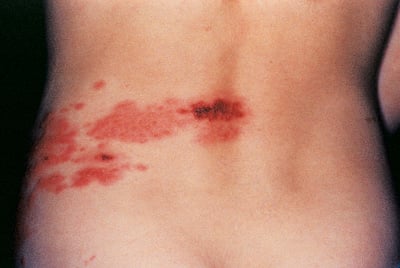
FIGURE 22.9 Herpes zoster (shingles).
Shingles is caused by the varicella-zoster virus, the same virus that causes chickenpox. After a person has chickenpox, the virus remains inactive in the body. It can reactivate for unknown reasons and cause shingles. The beginning symptoms include tingling, pain, or itchiness on one side of the body or face, usually on the torso. This can occur 1 to 5 days before a rash with fluid-filled blisters develops (FIGURE 22.9). The person is contagious to others who have not had chickenpox until the blisters scab over, in about 10 days. The rash clears up within 1 month. The person may also have fever, chills, headache, and nausea. Shingles can cause postherpetic neuralgia, vision loss, encephalitis, and facial paralysis.
The provider will do a history and physical examination to diagnose shingles. There is no cure, but antiviral medications may be ordered to help reduce complications and hasten recovery. Depending on the pain, the provider may also order anticonvulsants, antidepressants, or analgesics.