
Mouth Diseases and Disorders
April 11, 2024
Learning Objective: Examine mouth diseases and disorders, including the signs, symptoms, etiology, diagnostic procedures, and treatments.
Disorders can impact the structures of the mouth, including the gums, hard and soft palate, tissues, tongue, teeth, and lips.
Orofacial Clefts
Learning Objective: Describe orofacial clefts, including the signs, symptoms, etiology, diagnostic procedures, and treatments.
Orofacial clefts are one of the most common birth defects in the United States. Orofacial clefts include the following congenital disorders:
• Cleft lip: An opening in the upper lip caused by the lip tissues not completely joining before birth.
• Cleft palate: The tissue that makes up the palate (roof of the mouth) does not completely join before birth. The hard palate makes up the front section, and the soft palate makes up the back section. Cleft palate can affect one or both palates.
Children can have a cleft lip, a cleft palate, or both (FIGURE 19.5). Children with clefts can have problems with feeding, speaking, hearing, and ear infections.
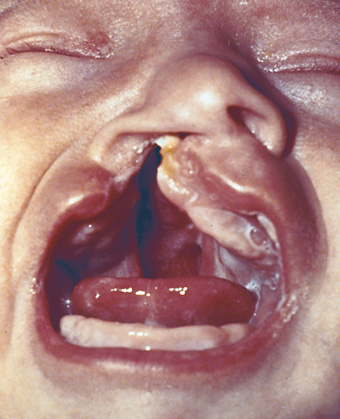
FIGURE 19.5 Cleft lip and cleft palate. Zitelli BJ, Davis HW: Atlas of pediatric physical diagnosis, ed 4, St. Louis, 2002, Mosby.
In most cases, the etiology is unknown, but researchers believe it involves genetics and environmental factors. Research studies have shown that women who smoke, have diabetes, or use certain medications (e.g., valproic acid) during pregnancy have an increased risk of having a baby with an orofacial cleft. The signs of an orofacial cleft are visible at birth. The child may have a split in the lip or the roof of the mouth. The cleft can affect one or both sides of the face.
The provider will identify the cleft right after birth. Sometimes the cleft is detected during a prenatal ultrasound. Treatment involves surgery to improve the child’s ability to eat, speak, and hear. A team of specialists is involved with the treatment of the related complications.
Additional Mouth Diseases and Disorders
Learning Objective: Describe additional mouth diseases and disorders.
Additional diseases and disorders of the mouth include the following:
• Cavities: Also called tooth decay or dental caries; plaque on the tooth creates the decay.
• Gingivitis: An inflammatory disease of the gums that causes redness, swelling, and bleeding. Part of the early stages of periodontal disease; caused by plaque depositing on the tooth for a short amount of time.
• Herpetic stomatitis: Inflammation of the mouth caused by the herpes simplex virus (also known as a fever blister or a cold sore).
• Leukoplakia: A condition of white patches on the lips and buccal mucosa often associated with tobacco use.
• Periodontal disease: Infection and inflammation in the mouth that destroys the gums, periodontal ligaments, and bone that support the teeth.
• Thrush: A yeast infection of the mouth and tongue. Risk factors include older age, infants, poor health, a compromised immune system (e.g., infection with the human immunodeficiency virus [HIV], acquired immunodeficiency syndrome [AIDS], chemotherapy), and taking antibiotics.